People of Data  /  Flagship  /  AI For Students

Fifty students. Ten startups. One school term.

AI For Students runs in schools and on campus. Students take a real problem, build an AI solution to it, and put it in front of people who ask hard questions — investors in a school, a paying client at university. Below: the pilot that started it at Kaumeya Language Schools with Edge, the university programme at MSA and ESLSCA, and the skills roadmap behind both.

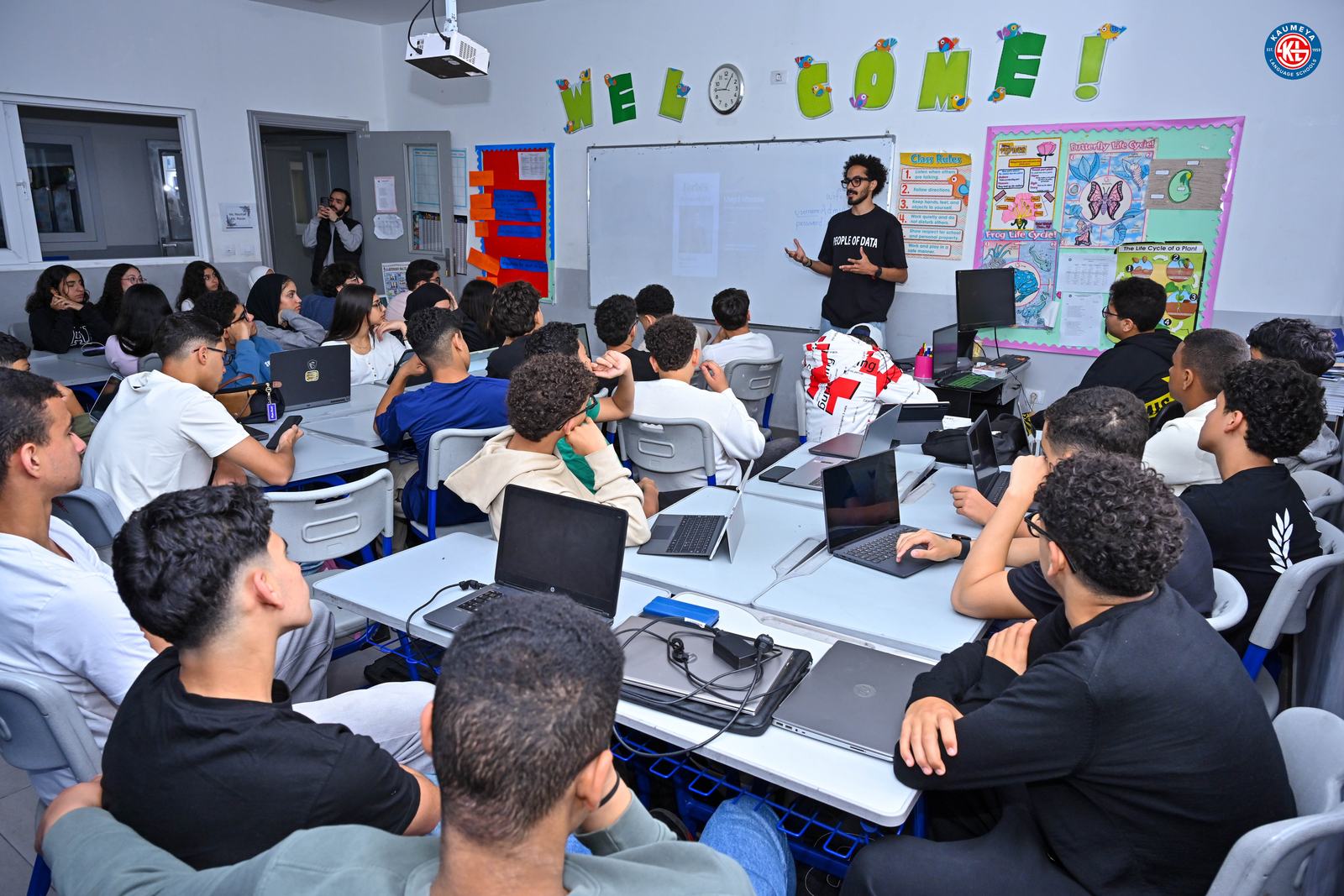
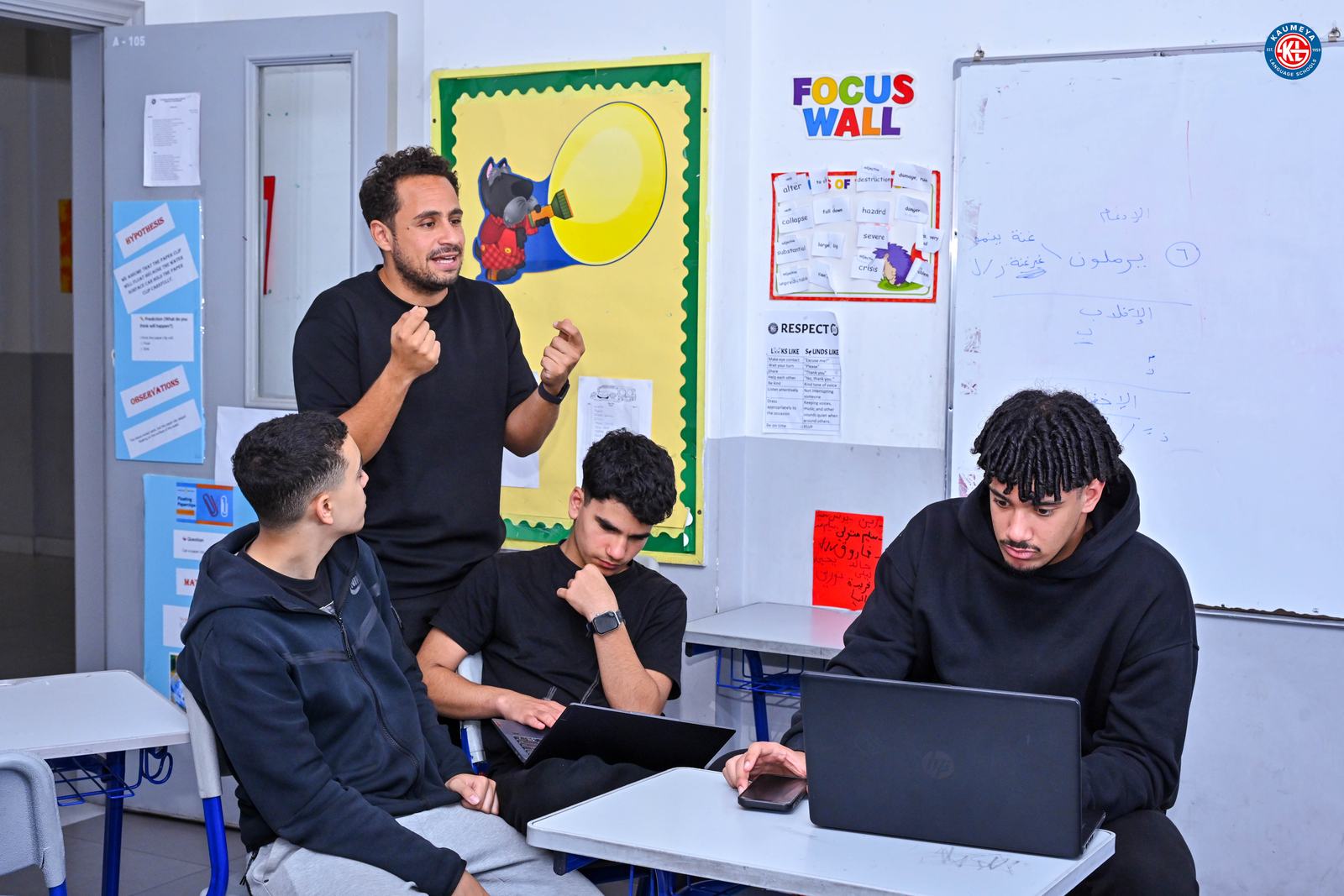
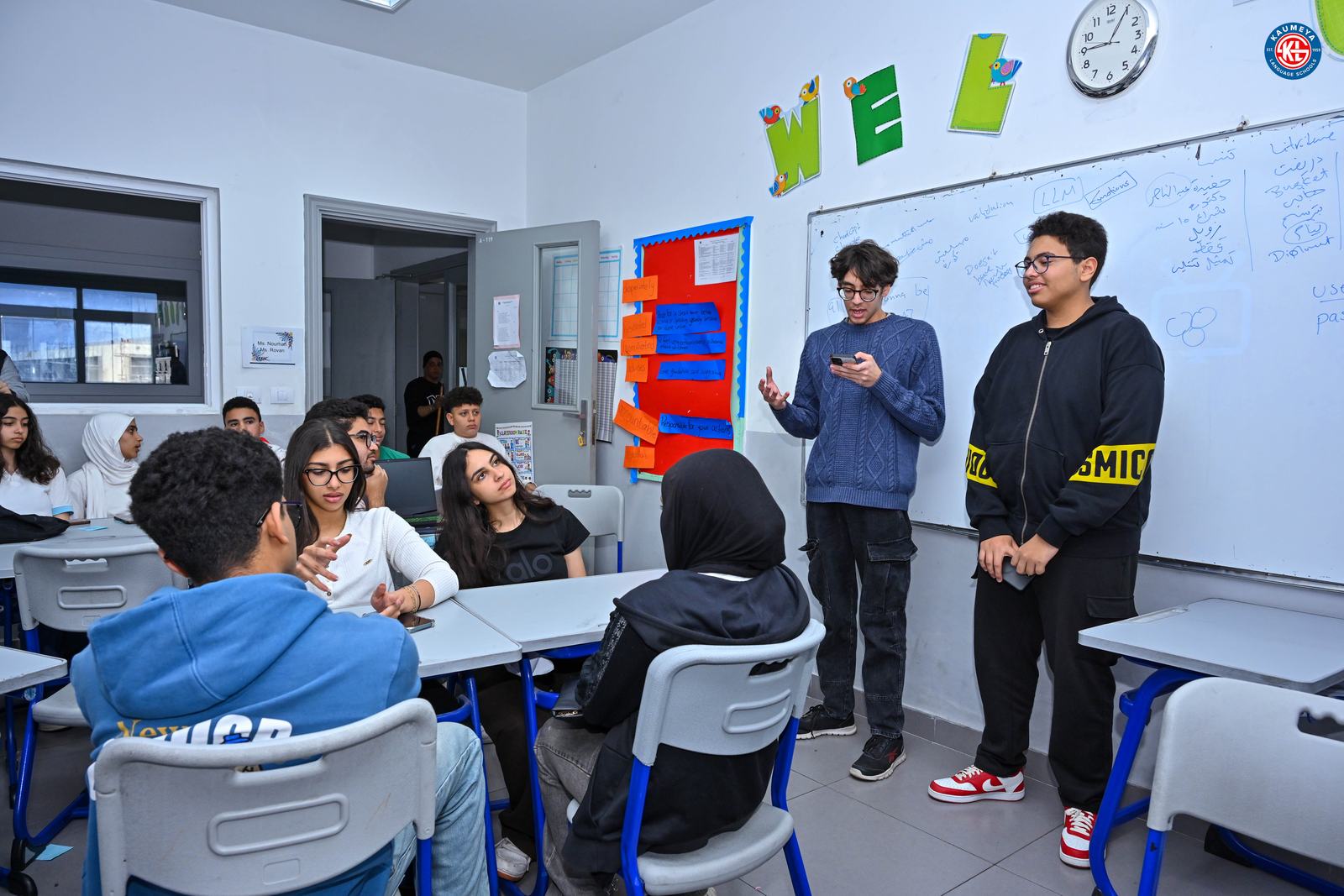
A People of Data session in progress at Kaumeya Language Schools Kaumeya Language Schools · Alexandria
Delivered by People of Data × Edge × Kaumeya Language Schools
50High-school students upskilled
10Teams, each run as a startup
10Working solutions built and pitched
1In daily use inside the school today
5Students hired into internships afterwards
The school pilot · the turn

They started bored. Nobody stayed that way.

This is the part schools ask about most, so we will be honest about it. The first hour was flat. Fifty teenagers in a room, arms folded, no idea what any of this had to do with them. What changed it was not a better slide deck — it was handing them a problem they actually cared about and the tools to solve it before the bell went.

Hour one

“What are we even doing here?”

No brief they believed in. AI as a thing that happens to other people, in other countries, for other jobs. The usual classroom posture: wait for instructions, do the minimum, go home.

By the end

Fifty out of fifty, still building

Every student in a team. Every team with a product, a number and a story. Students staying past the session to finish a build, arguing about pricing, rehearsing a pitch in the corridor.

How it runs

Four Saturdays, start to pitch.

No lecture series, no certificate at the end of a video course. Four working sessions on campus, each one ending with something that did not exist that morning.

Saturday 01

Find the problem

Teams form and go hunting for something genuinely broken in their own school — not a hypothetical, something they can point at.

  • Team formation and roles
  • Problem hunting on campus
  • Interviews with real users
  • Validate or kill the idea
Saturday 02

Build with AI

From prompt to product. Teams learn to direct AI models properly — not to ask for answers, but to specify, iterate and ship.

  • Prompting past the beginner ceiling
  • Design and generate the interface
  • Working prototype in the room
  • Test it on classmates, fix it
Saturday 03

Make it a business

An idea that cannot pay for itself is a hobby. Teams size the market, price the product and build a financial model they can defend.

  • Market sizing and segments
  • Pricing and unit economics
  • Three-year financial model
  • Costs, risks and assumptions
Saturday 04

Pitch to investors

A real panel, real questions, no soft landing. Each team gets the floor, the demo runs live, and the numbers get challenged.

  • Story, demo and ask
  • Live product walkthrough
  • Panel Q&A under pressure
  • Feedback they can act on
The method

Gamified, because attention is the hard part.

Teenagers do not have an information problem. Everything we could teach them is already a search away. What they have is an attention problem — so the entire programme is built as a game with real stakes, and almost none of it is us talking.

Teams, not classes

Ten teams of five, each one a company with a name and roles. You are not a student in row three any more — you are the person your team is waiting on.

Points for shipping

Scores go to teams that produce, not teams that plan. Every round ends with something on a screen, and the board updates in front of everyone.

Short, hard timeboxes

Sprints measured in minutes, not weeks. Deadlines close fast enough that overthinking is not an option and the only way through is to build.

Learn by making

No tool is introduced in the abstract. Every technique arrives at the moment a team needs it to get unstuck, which is the only moment it sticks.

Public demos every round

Teams show their work to the room, not to a marking sheet. Peer pressure turns out to be a far better motivator than a grade.

A real prize at the end

An investor panel and a winner. The competition is what makes the last two weeks feel like something worth staying late for.

The stack

The same tools professionals actually use.

Nothing in this programme is a teaching sandbox. Students work in the production tools, and they learn the advanced end of them — how to brief a model, how to iterate on its output, how to get from a paragraph of intent to a deployed product.

Claude

The thinking partner. Problem framing, user interviews, product specs, business logic and the writing that surrounds all of it.

Research · specs · strategy · copy
ChatGPT

Ideation and fast iteration. Where teams stress-test a concept, generate options and argue with a second opinion before committing.

Ideation · iteration · analysis
Replit

Where the code lives and runs. Teams go from idea to a hosted, working application without ever setting up a laptop environment.

Build · run · deploy
Lovable

Interface and product surface. A team describes the app it wants and gets something real enough to put in front of a user the same afternoon.

Product · UI · prototype
Higgsfield

Generative video and imagery. The brand, the demo film and the pitch visuals — made by the team, not bought from a template.

Video · imagery · brand
What each team produced

Three deliverables. No participation trophies.

A team only counted as finished when it had all three. Ten teams made it to the panel, one of the ten is now running inside Kaumeya as a real school system — and five of the fifty students walked out of the programme with an internship.

Deliverable 01

A working product

Not a mockup and not a slide. A functioning AI solution to a problem the team found on their own campus, built and hosted by the students themselves, and tested on the classmates it was meant to serve.

Deliverable 02

A financial model

Market size, pricing, cost base, and a projection they had to justify line by line. The moment a student has to defend their own assumptions is the moment the idea stops being a school project.

Deliverable 03

An investor pitch

Story, live demo, numbers and an ask — delivered to a panel that asked the questions investors actually ask. Sixteen-year-olds fielding challenges on retention and unit economics, in front of the whole cohort.

5of 50
What happened next

Five students went straight into internships.

The pitch panel is not a performance. People in that room were looking for talent, and five of the fifty were offered real positions off the back of what they built — before they had finished school, and without a CV between them. That is the whole argument for teaching this way: the work is the credential.

In the room

What it actually looked like.

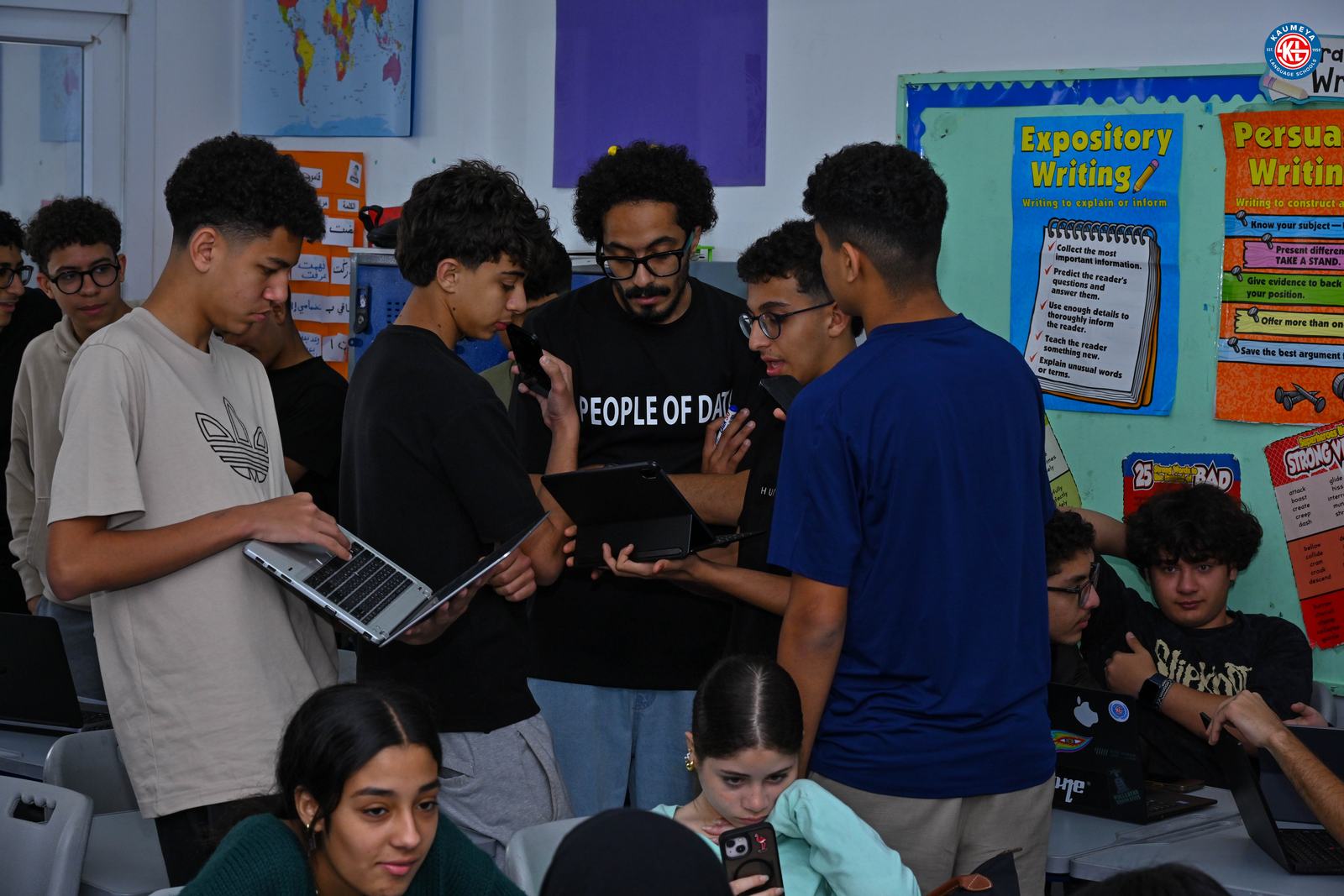
A People of Data mentor working with a team of students
Mentors work the room, team by team
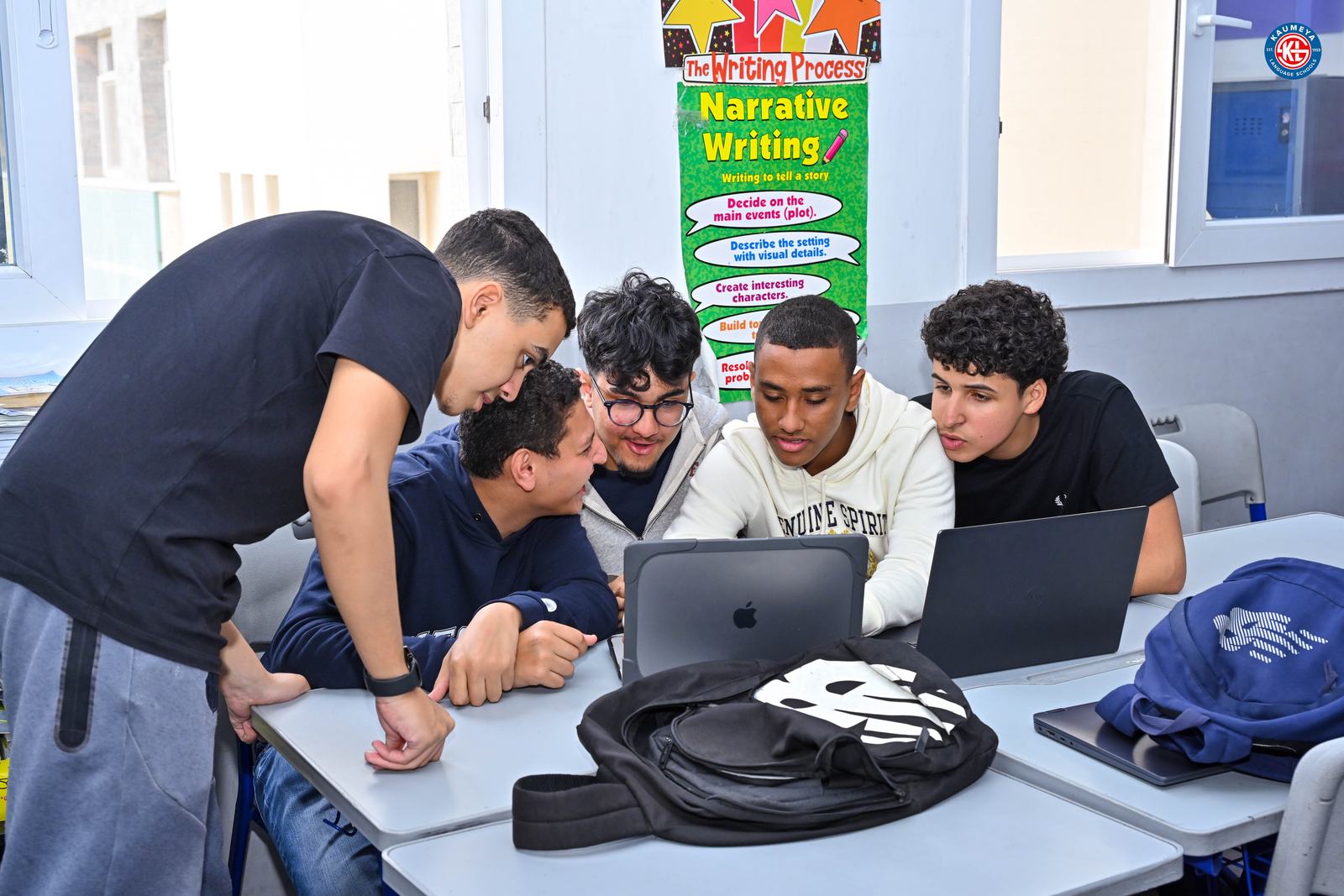
A team huddled around two laptops
Five to a team, one screen
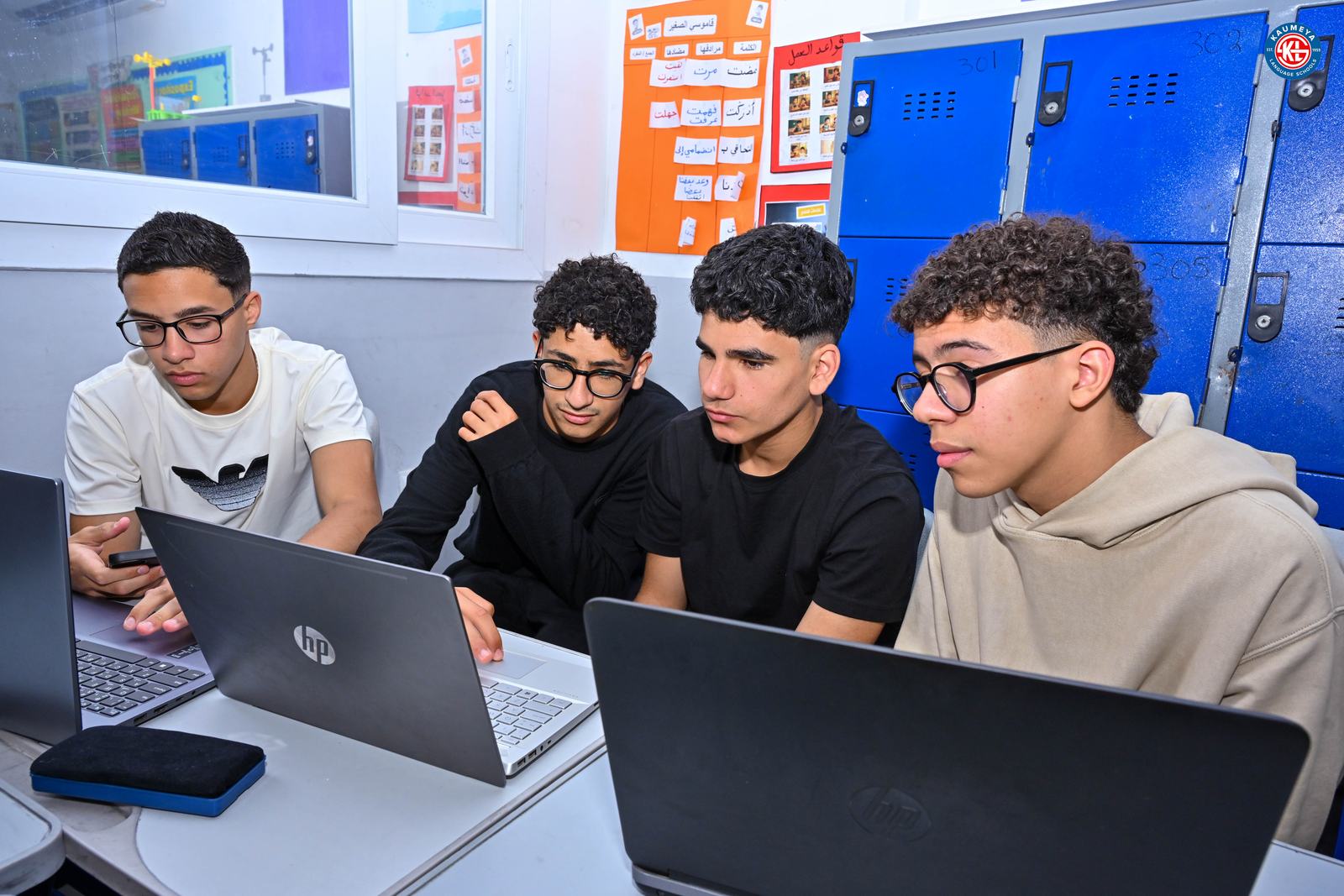
Students building their solution on laptops
Building, not watching
A coach explaining a concept to three students
Taught at the moment it is needed
Two students presenting their startup to the class
Every round ends in a demo
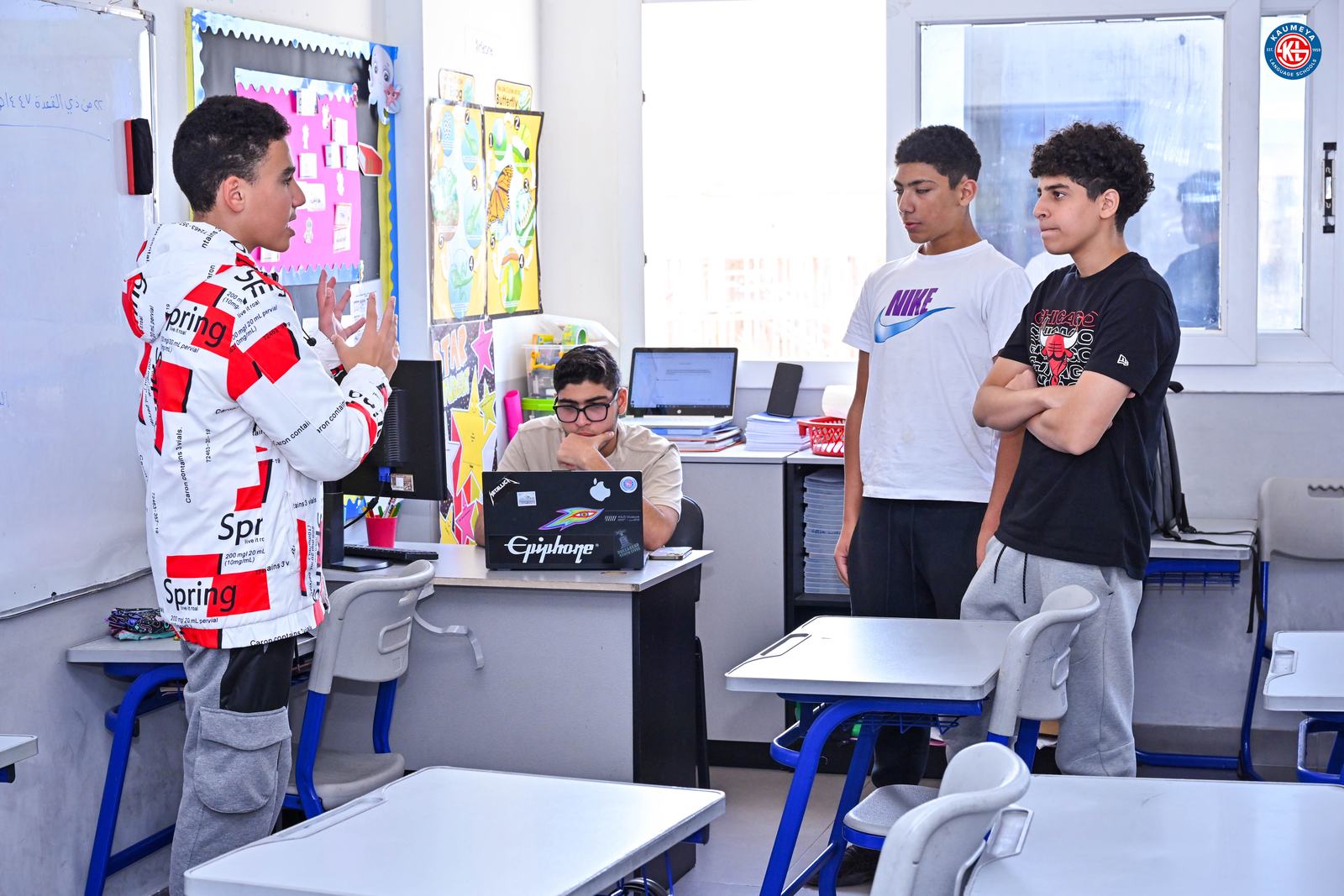
A student presenting his idea to classmates
Defending the idea in front of the room
On campus

The same programme, for universities.

At university level the brief changes. Students are already studying data, AI and engineering — what they are missing is a real client, a real dataset and someone senior watching the work. So we bring all three. We upskill them, mentor them through the build, and pair every team with an actual company that needs the solution. Their faculty supervise the academic side; our practitioners supervise the engineering.

MSA University
MSA University · October

Three hackathons, three real clients

Data & AI engineering students

Each hackathon takes a company with a genuine problem and a genuine dataset, and puts a team of Data and AI students on it. Not a case study, not a sanitised sample set — the client's own data, the client's own constraints, and a solution they can use.

Hackathon 01AI in Media

Shark Tank Egypt

Media · broadcast

An AI solution built for one of the most-watched business formats in the country — applied to how the show finds, sorts and tells its stories.

Hackathon 02AI in Media

Business Bel3arby

Media · digital publishing

Arabic-language business media at scale. The team worked the language problem head on — the part most off-the-shelf tools quietly fail at.

Hackathon 03AI in Healthcare

BeWell Clinics

Healthcare · 5 governorates

Real clinical operations data across five governorates. Multi-site, messy and sensitive — which is exactly the condition healthcare AI has to work in.

Supervision · university faculty on the academic side Mentorship · People of Data practitioners on the engineering side Output · a solution the client can actually deploy

ESLSCA University
ESLSCA University

Engineering students, making films

In progress

Twelve students from the College of Engineering, working inside Egypt Eternal Voices — our national generative-AI storytelling programme run with Dr. Zahi Hawass. Their brief is to make films about Egypt's ancient history, pairing verified historical research with generative video. Engineers learning to direct a story is not a detour from technical work. It is the fastest way we have found to teach judgement about what these models actually produce.

The cohort12 students

College of Engineering

ESLSCA University

A single focused group rather than a mass intake — small enough that every student takes a real role on a real film.

The briefAncient Egypt

Egypt Eternal Voices

Generative AI storytelling

Historical accuracy first, generation second. Research the period, then use the tools to show it — not the other way round.

The outputFinished films

Screened and judged

AI Film Festival track

The films come out of the edit and onto a screen, in front of a jury and an audience — the same standard as every other Eternal Voices entry.

With · Dr. Zahi Hawass Output · a finished film per team, with a festival route
Skills roadmap

Every track ends in something you can show.

We do not teach to a syllabus, we teach to a roadmap. Each path names the skills a student walks away holding, in the order they pick them up, and ends in a piece of evidence — a shipped product, a client reference, a finished film — that an employer can look at. That is what turns a course into an internship.

01 Foundations

Think with the tools

AI fluencyPrompt design Problem framingUser interviews Validation
Ends with · a problem worth solving
02 Build

Ship a product

AI app buildingLovable ReplitInterface design User testingIteration
Ends with · a working prototype
03 Business

Make it pay

Market sizingPricing Unit economicsFinancial modelling Risk & assumptions
Ends with · a model you can defend
04 Proof

Stand it up in public

Pitch craftLive demo Investor Q&AStorytelling
You leave with · a shipped product, a pitch on record, an internship route
Evidence produced

A product other students actually use, a financial model, and a recorded pitch to a panel. At Kaumeya, five of the fifty were hired into internships off the back of it.

01 Data

Work with the real thing

Client data intakeCleaning & wrangling Exploratory analysisArabic-language data Privacy & consent
Ends with · a dataset you trust
02 Modelling

Build the intelligence

Feature engineeringModel selection LLM integrationRAG Prompt & context engineeringEvaluation
Ends with · a model that measurably works
03 Productise

Turn it into software

APIsDeployment Agentic workflowsDashboards Monitoring
Ends with · something running, not a notebook
04 Delivery

Hand it to a client

RequirementsDocumentation Stakeholder demoHandover Working in a team
You leave with · a deployed solution and a named client reference
Evidence produced

A solution built on a real company's data, delivered to that company. Shark Tank Egypt, Business Bel3arby and BeWell Clinics are on these students' CVs as clients, not as coursework.

01 Story

Earn the right to tell it

Historical researchSource verification Narrative structureScriptwriting Storyboarding
Ends with · a script that holds up
02 Generate

Direct the model

Text-to-imageText-to-video Character consistencyAI voice HiggsfieldShot design
Ends with · usable footage, not lucky footage
03 Craft

Make it a film

EditingPacing Sound designColour Subtitling & translation
Ends with · a finished cut
04 Release

Put it in front of people

Festival submissionJury feedback Public screeningPortfolio
You leave with · a finished film and a festival credit
Evidence produced

A complete short film made with generative tools, screened and judged. Egypt Eternal Voices runs with Dr. Zahi Hawass.

Where it goes next

The pilot worked. Now it scales.

Pilot complete

Kaumeya Language Schools

Alexandria. Fifty students, ten teams, ten solutions built and pitched, one now implemented and in daily use inside the school, and five students into internships. Delivered with Edge.

Running now

Dar El-Tarbia, MSA and ESLSCA

The second school cohort is under way at Dar El-Tarbia in Zamalek. On campus, MSA students are shipping to three real clients and twelve ESLSCA engineers are making films inside Egypt Eternal Voices.

Bringing it to your campus? The programme runs on your site, on your timetable, with our mentors.
Talk to us about your school See our other programmes

AI For Everyone, Everywhere!

Not a slogan. A test we hold every programme to — if it only reaches Cairo, or only reaches people who already had a head start, we haven't done the work.